Key Takeaways
Created with AI - we're still experimenting, so apologies if it misses the mark
- Former principal artist Nathan Purkeypile argues that Starfield would have benefited from fewer, handcrafted planets rather than relying on procedural generation.
- The games massive scale creates repetitive environments and sparsely populated areas outside of its main cities, diminishing the sense of discovery found in older Bethesda titles.
- Purkeypile suggests developers should fully commit to a pure procedural approach like No Mans Sky or focus entirely on unique, manually built worlds instead of mixing both methods.
- Bethesda may be learning from this experience by narrowing their focus for future projects, as seen with the more curated design of recent expansions.
Recommended products
This page contains affiliate links. As an Amazon Associate, we earn a commission from purchases made through these links.

Nathan Purkeypile, a former principal artist at Bethesda Game Studios with 14 years of experience, argues that the decision to include over one thousand explorable planets in Starfield was not the most advantageous choice for the space RPG. Purkeypile, who contributed to Fallout 3, Fallout 4, The Elder Scrolls V: Skyrim, and served as principal artist on Fallout 76, believes the game would have benefited from fewer, more distinct, and carefully crafted environments. His past work includes iconic locations like Diamond City in Fallout 4 and Little Lamplight in Fallout 3. Purkeypile was involved in Starfield’s early development, contributing to the layout of the city of Neon, before departing the project about a year into its creation.
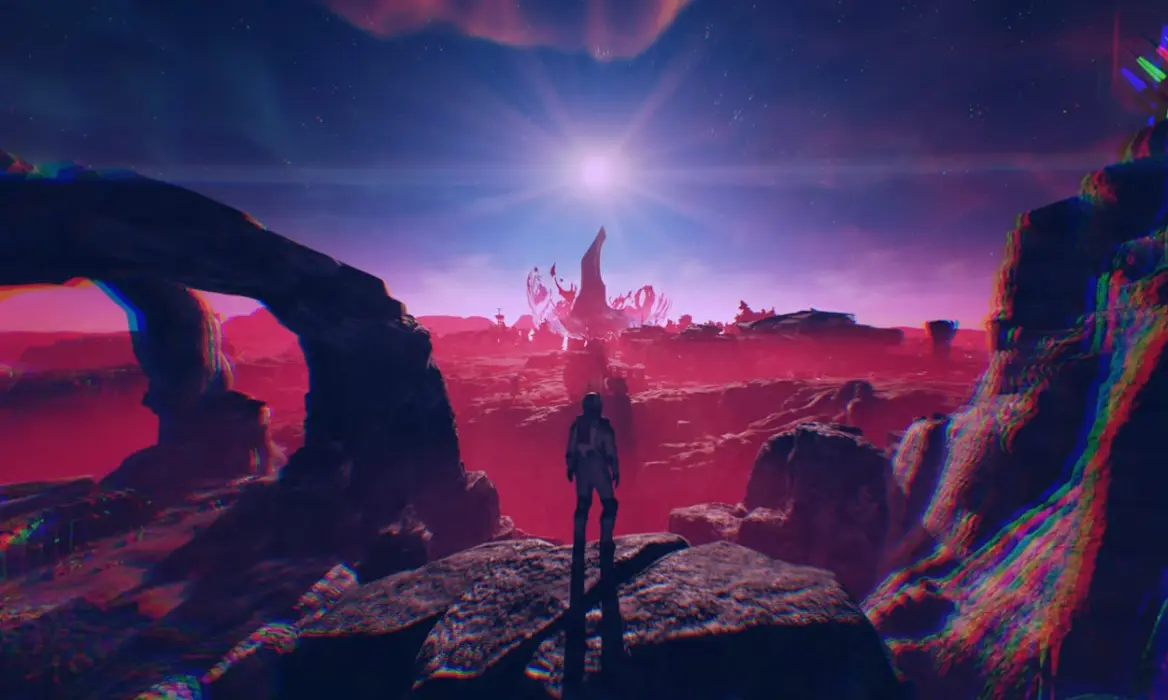
During his time on Starfield, Purkeypile drew parallels between the game’s procedurally generated planets and the repetitive dungeons of Mass Effect 1. He observed that while Starfield offers scale, its recurring structures and sparsely populated landscapes make its galaxy feel less exciting than Bethesda’s more compact open worlds. Purkeypile suggested that Bethesda should either focus on a smaller group of handcrafted planets or commit fully to procedural generation, akin to No Man’s Sky, rather than “stitching content together with slight variations.” He pointed out that Starfield’s major cities are densely detailed but the regions just beyond their borders are largely empty. This contrasts with exploring titles like Fallout or The Elder Scrolls, where venturing off main paths often rewards players with curated spots containing environmental stories—an element Purkeypile feels is lacking in Starfield due to excessive repetition.
Purkeypile voiced his concerns about the thousand-planet goal early in Starfield’s development, even though he was not solely in charge of the decision. His perspective emphasizes that handcrafted density is more critical than raw scale for building an interesting universe. When asked in an interview with The Examined Game YouTube channel how his approach to exploration structure might differ if he had been involved in design decisions, Purkeypile was direct: “If I were leading Starfield development team, I would not have taken this path.”
Purkeypile stated that his priority as lead would have been to create a handful of planets with handcrafted layouts, concentrating efforts on making each one more unique and memorable. Indeed, Starfield’s defining characteristic is its immense scale, allowing players to land on over a thousand planets, moons, and other celestial bodies. While many of these environments are procedurally generated, specific content points receive manual input from the development team. However, Purkeypile contends this approach conflicts with the traditional strengths of Bethesda RPGs, such as Skyrim, where exploration within relatively compact worlds permitted almost every region to feature developer-planned elements. He argues that Starfield’s large number of planets has detracted from this philosophy, shifting from fewer worlds filled with distinctive locations to an immense quantity of surfaces that individually feel less significant.
Criticism also centers on content repetition. Since many environments are procedurally generated, certain locations, structures, and activities reappear during exploration, potentially diminishing the sense of discovery that characterized earlier Bethesda games. Purkeypile noted that even within the main campaign, situations arise where similar content repeats, which he believes would have been less problematic had the developer focused its efforts on a limited number of entirely handcrafted planets. Purkeypile worked as a lighting lead on Starfield before leaving Bethesda approximately two years prior to its release.
He reiterated that despite the game featuring over 1,000 explorable planets, moons, and celestial bodies, with much of the content procedurally generated but with specific points receiving manual work, he encountered repeated locations like dungeons and buildings across thousands of planets, even within the main campaign. Purkeypile stated that for a game planning thousands of planets, a full procedural generation approach, akin to No Man’s Sky, is necessary, rather than what he calls “stitching together existing chunks,” which he likens to “space quilts.” Purkeypile’s extensive work at Bethesda includes serving as a world artist on Fallout 3, Fallout 4, and The Elder Scrolls V: Skyrim, and as lead artist for Fallout 76 and its expansions, The Pitt and Point Lookout.
Shattered Space DLC Reveals Why Starfield’s Thousands of Planets Failed to Engage Players
Bethesda’s subsequent approach with the Shattered Space expansion DLC, which concentrated its experience in a more specific, manually crafted area rather than expanding procedural scale, suggests a potential reevaluation of the expansive planetary design. Thus, the decision to pursue such an enormous scale remains one of the most discussed aspects of Starfield. Although the over thousand planets were crucial for selling the concept of freedom and space exploration, their sheer quantity ultimately contributed to a primary criticism: the feeling that the game’s universe, while immense, is not always as engaging as its size suggests.
In Case You Missed It
With the long-awaited confirmation that **Bethesda Confirms Fallout 5 Enters Pre-Production and Officially Announces Remasters for Fallout 3 and New Vegas** by Jonathan Dubinski, published on August 1st, 2026, fans can finally breathe a sigh of relief regarding the future of our favorite series. This post dives deep into how Microsoft Gaming’s recent restructuring has accelerated Bethesda Game Studios’ roadmap, revealing that while *The Elder Scrolls VI* remains their immediate focus, Fallout 5 is officially in pre-production using shared technology and promising major graphical upgrades for classic titles on modern platforms; whether you are eager to see the next iteration of a legendary RPG or looking forward to playing remastered versions of your favorite vaults alongside a renewed partnership with Obsidian Entertainment, this article provides all the essential updates on the franchise’s multi-front strategy. If you find yourself equally captivated by evolving visual storytelling and shifting cinematic languages in gaming, be sure not to miss “1666 Amsterdam: Three Eras, Three Identities – Developers Explain All” by Bruno Pferd from July 2026, which dives into an upcoming title spanning the Dutch Golden Age inspired by masters like Rembrandt and Vermeer, an Italian Giallo homage channeling Dario Argento and David Lynch, and an alternate timeline during the witch trials—all meticulously researched to evoke unique atmospheres through contrasting lighting, color palettes, and camera work that challenge players with vastly different visual identities in every era. Finally, don’t miss the latest deep dive into *Tomb Raider: Legacy of Atlantis*, a highly anticipated remake by Ahmed Hassan published on August 11, 2026 via Tomb Raider Legacy of Atlantis promises more demanding puzzles and ruthless traps that modernizes Lara Croft’s legendary debut while honoring its roots by integrating exploration with “Mythology vs. Engineering” to replace arbitrary barriers, revamping classic puzzles for veteran players who can spot their own clues rather than relying on hand-holding, and bringing back the franchise’s most iconic deadly traps as genuine gameplay threats; with settings drawing directly from Greek mythology and Egyptian engineering coming February 12, 2027, you should check out this exclusive breakdown to see how *Legacy of Atlantis* aims to restore the true spirit of adventure that defined Lara Croft’s early saga before it hits PC, PS5, Xbox Series X|S, and Nintendo Switch 2; so keep exploring these exciting updates via Bethesda Confirms Fallout 5 Enters Pre-Production and Officially Announces Remasters for Fallout 3 and New Vegas and 1666 Amsterdam: Three Eras, Three Identities – Developers Explain All to stay ahead of the curve!

| Specification | |
|---|---|
| Official Name | Starfield |
| Brief Summary | In the year 2330, twenty years after a devastating interstellar conflict known as the Colony War, the player character works as a space miner for Argos Extractors. During a routine dig, they uncover a strange artifact with unusual gravitational properties and experience a powerful vision upon touching it. This discovery draws the attention of Constellation, a renowned group of galactic explorers who believe these artifacts represent one of the greatest remaining mysteries in the settled systems. After delivering the artifact to Constellation's headquarters in New Atlantis, the capital of the United Colonies, the player joins the group in their quest to locate more artifacts scattered across known space. Their search soon draws competition from the Starborn, enigmatic beings with their own claims to the artifacts, raising the stakes of what began as simple exploration into something far more consequential.
Starfield is a single-player action role-playing game developed by Bethesda Game Studios and set in an open-world space environment. Players create a customizable character and explore a region of the Milky Way galaxy spanning approximately 50 light-years, landing on over 1,000 planets with procedurally generated landscapes. Gameplay includes first-person and third-person combat using firearms, explosives, and melee weapons, as well as spaceship construction, outpost building, resource gathering, and crafting. Players recruit companion characters, join factions, and progress through skill trees spanning Physical, Social, Combat, Science, and Tech categories. |
| Platforms | PlayStation 5, PC (Microsoft Windows), Xbox Series X|S |
| Released | September 6, 2023 |
| Genre | Shooter, Role-playing (RPG), Adventure |
| Play Modes | Single player |
| Content Rating | 19+ |
| Languages | Chinese (Simplified), Korean |
| Genre | Bethesda Game Studios |
| Genre | Bethesda Softworks |
| Ratings | 78/100 (353 reviews) |
They also talk about it
Links to external sources for further reading
- Veteran Bethesda Artist on Starfield Having 1,000+ Planets: 'I Don't Think This is a Good idea' - NewsVeteran Bethesda Artist on Starfield Having 1,000+ Planets: 'I Don't Think This is a Good idea' - Newsvgchartz.com
- 'I don't think this is a good idea': Veteran Bethesda world artist says Starfield having 1,000+ planets was the wrong move'I don't think this is a good idea': Veteran Bethesda world artist says Starfield having 1,000+ planets was the wrong movevideogameschronicle.com
- Starfield's Galaxy Was Simply Too BigStarfield's Galaxy Was Simply Too Bigexputer.com
Have any thoughts?
Share your reaction or leave a quick response — we’d love to hear what you think!
-
 0
0
-
0
-
0
-
0
-
0
-
0


