In Shuhei Yoshida's View, Chinese Game Studios to Be Highly Competitive and Productive
At Weplay Expo 2025, Shuhei Yoshida found China's indie game scene incredibly impressive, showcasing creativity, originality, and innovation that rivals or even surpasses Japanese and Western studios.
Marcus Thompson · 2 min read
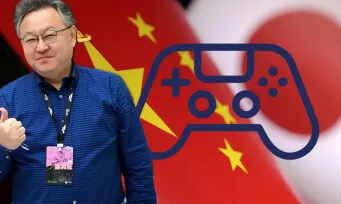
Shuhei Yoshida Praises China's Game Studios at WePlay Expo 2025 for Innovation and Rivalry with Japan and West
Shuhei Yoshida, former head of Sony Worldwide Studios, attended China's WePlay Expo 2025, the nation's leading indie game event. Yoshida has closely observed the Chinese indie game scene, assessing its competitiveness against Japan. He was among the first at Sony to recognize the potential in China's gaming industry, a foresight that led to the establishment of the China Hero Project. At WePlay Expo 2025, Yoshida participated in a panel discussion on innovations in modern gaming. He commended Chinese developers for their creativity and originality, asserting that they now rival studios in Japan and the West. He noted a significant shift from earlier events like Chinajoy, which often featured homogenous game offerings. Yoshida highlighted Chinese studios' competitive advantage in speed and team size, which enables rapid development. He also praised the entrepreneurial spirit of young Chinese developers, noting similarities to those involved in the China Hero Project. At WePlay Expo 2025, Yoshida observed significant innovation in Chinese game titles. He believes Chinese studios no longer need to look to Japan for inspiration, emphasizing the strength of their community and their technologically adept approach.
Shuhei Yoshida Celebrates Chinese Game Innovators' Use of Digital Tools and Collaborative Techniques for Global Competitiveness
In an interview with 4Gamer.net, Yoshida elaborated on how Chinese developers are leveraging digital tools for game testing and promotion. They utilize platforms like QQ for community feedback, similar to Discord in Japan, fostering player involvement in game development. Furthermore, advancements in tech collaborations, such as improving interoperability between Unity and Unreal Engine, empower indie studios to create high-quality games for multiple platforms, effectively competing with Japanese productions. Yoshida views China as a significant market for indie innovation, citing Chinese developers' creativity and rapid development capabilities as areas where Japanese studios could learn. He also stressed the importance of showcasing game prototypes and gathering feedback, stating that player and mentor input is essential for progress, even for the most promising ideas. Yoshida has been actively promoting his services globally. He is scheduled to appear at the Taipei Game Show 2025 in January 2026, where he will continue to seek out emerging talent from China.

// The Friday recap
Enjoyed this article? You will like the Friday recap.
Where to buy
As an Amazon Associate we earn from qualifying purchases.

Logitech G305 LIGHTSPEED Wireless Gaming Mouse, Hero 12K Sensor, 12,000 DPI, Lightweight, 6 Programmable Buttons, 250h Battery Life, On-Board Memory, PC/Mac - Black
See the price on Amazon
Redragon M612 Predator RGB Gaming Mouse, 8000 DPI Wired Optical Mouse with 11 Programmable Buttons & 5 Backlit Modes, Software Supports DIY Keybinds Rapid Fire Button
See the price on Amazon
acer Wired Gaming Mouse, 12,800 DPI RGB Ergonomic Computer Mouse with Optical Sensor, 8 Programmable Buttons, 12 Backlit Modes, Software for DIY Keybinds, Rapid Fire, USB Gaming Mice for Laptop, PC
See the price on Amazon