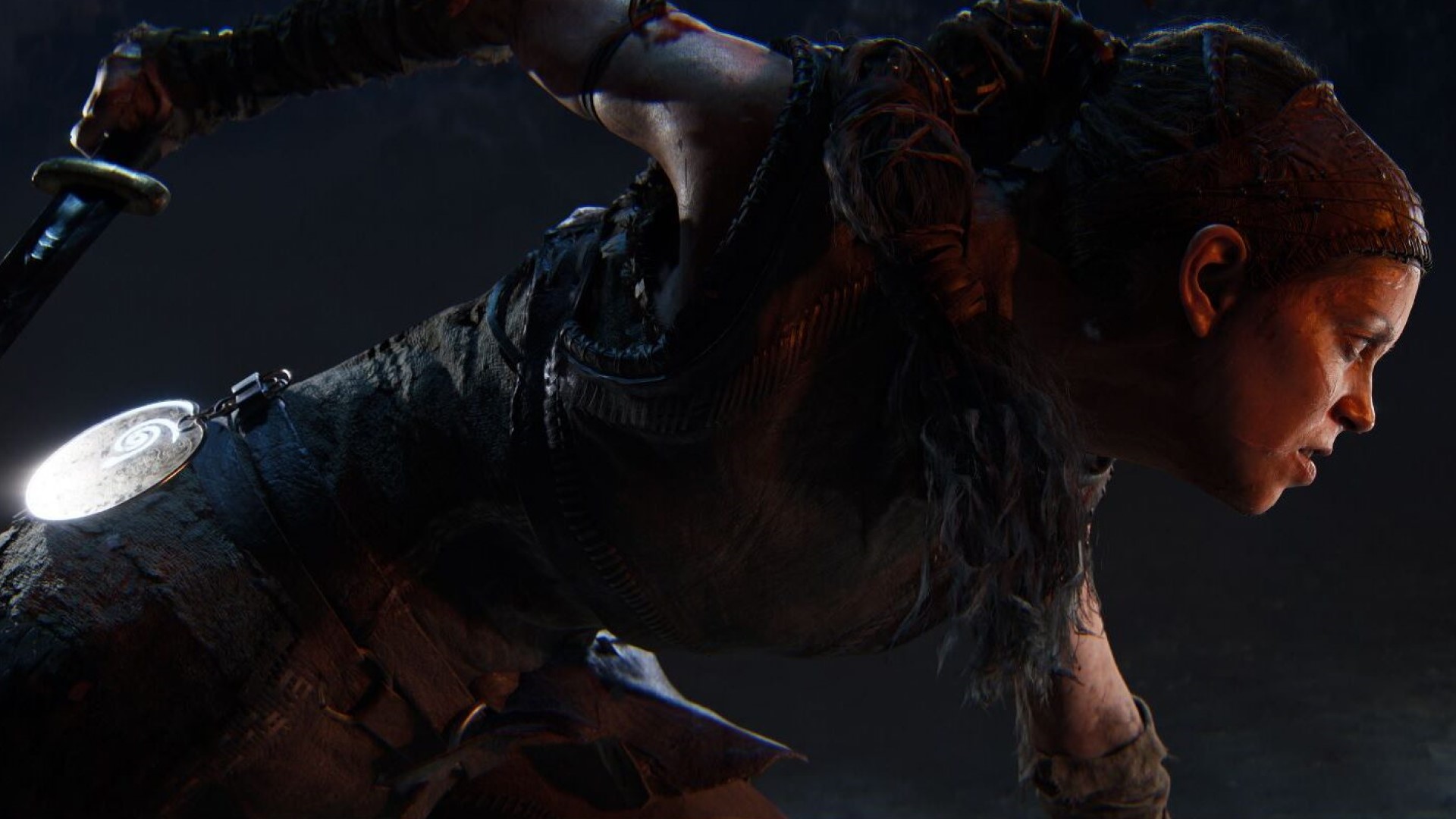
Microsoft and Xbox frequently face criticism for the lack of exclusives, especially on the Xbox Series X, which is warranted. However, a significant game, Hellblade 2, is set to release on May 21st. In less than two months, we will finally be able to experience this sequel that has been teased since 2019. Indeed, it has been five years since the initial teaser video was released. But progress seems to be accelerating; just a week ago, an event took place in Cambridge at Ninja Theory’s headquarters where attendees could get hands-on with the game. The session lasted for 45 minutes and allowed participants to see how the game looks and what improvements have been made in gameplay, particularly in combat mechanics. Although very few media representatives from around the world were invited on-site, numerous details have emerged. I have compiled and condensed all the new and useful information to determine if Hellblade 2 will indeed meet the technical and visual expectations that have been promised for five years. Additionally, there are now new gameplay images available.
This has not gone unnoticed for some time, and we have been discussing it in our written pieces and video editorials for quite a while now: the current generation of consoles from PlayStation and Xbox is somewhat disappointing. True next-generation games, featuring flawless technology with 4K resolution and 60 frames per second (fps), as promised with the PS5 and Xbox Series X, have not materialized yet. There are several reasons behind this: starting with the pandemic, which led to a supply issue for components and extended the transition period between previous and next-generation consoles. Additionally, when developing games for both older and newer systems, developers cannot fully utilize all the resources of the new machines. Another factor is that some studios’ work methods might be questioned, as they can prolong development times and affect production budgets. Furthermore, true next-gen tools like Unreal Engine 5 took time to become established on home consoles. Notably, Hellblade 2 will likely meet player expectations in terms of visuals. Media and journalists invited to Ninja Theory’s event are unanimous: Hellblade 2 is a visual standout, with no downgrade since the promises made in 2019. The game aims for photorealism, including fine details such as veins in the eyes of character Senua. The English studio strives for perfection at all costs, and based on feedback from on-site guests, it seems they are achieving this goal.
This is partly due to Unreal Engine 5, as well as Ninja Theory’s talents and their masterful use of the tools provided. The game promises next-generation rendering, featuring highly detailed character modeling, extreme attention to detail, motion-captured animations for everything, and even more realistic facial expressions. For every movement and action, Senua reacts accordingly; she grimaces when stabbing an enemy with her sword in Hellblade 2 and tenses up when avoiding attacks. While this level of detail exists in other games, it is pushed to its extreme in Hellblade 2, making the emotional aspect of the game stand out as next-generation in its physical form. However, this level of detail comes at a cost: frame rate stability. Unfortunately, Hellblade 2 will not run at 60 frames per second, despite being primarily a side-scrolling game. Ninja Theory confirmed to on-site media that the frame rate will be locked at 30fps to prioritize stability and maintain visual quality. This further fuels the controversy surrounding the performance of current consoles…
Another crucial detail revealed from the Hellblade 2 previews is that Tameem Antoniades is no longer part of Ninja Theory. He apparently left the studio quietly, with no public mention or explanation. A Xbox representative present at the event confirmed this information to on-site journalists. It has been learned today that he is one of Ninja Theory’s co-founders, the creative director for all previous games, and most notably, the originator of the 2013 DmC Devil May Cry reboot and its controversial emo look. Tameem Antoniades has been replaced by three individuals: Dan Attwell, who serves as the director of environment art; Mark Slater, the visual effects director; and David Garcia, the audio director. The reason for such a significant figure leaving so close to the game’s release, particularly without any public discussion, is unclear but certainly represents a sudden development… we leave it to you to speculate.
Let us now focus on Hellblade 2 and the hands-on experience that provided insight into the game’s story, which unfolds after the events of its predecessor. For those who have not played the first installment from 2017, it is advisable to do so, at least to grasp the conclusion. In this series, we play as Senua, a Pictish warrior woman from the 10th century suffering from mental health issues, and thus hearing voices. Notably, during that era, being affected by psychoses was not regarded as an illness but rather as a curse. Consequently, Senua faces ostracization, humiliation, and most importantly, isolation. The game’s development centers on this aspect with a highly developed and intense sound design where each auditory cue signals enemy locations. In the first Hellblade, sound played as crucially important a role as visuals in depicting the character’s struggle against psychoses. Ninja Theory worked closely with mental health experts and individuals living with such conditions to create an authentic experience.
In this series, Senua continues to grapple with her psychoses but has developed a way to accept and better manage them. This is the reason behind the developers’ decision to evolve both the game and its gameplay mechanics. In Hellblade 2, Senua will no longer embark on her epic journey alone. At the conclusion of the first installment, she mourned the loss of her beloved, and this time, Senua travels to Iceland in search of Norse slave traders who have devastated her community in the northern British Isles. Although Senua is not entirely solitary during this quest, choosing Iceland as a setting remains an analogy for isolation, given that the country is among the most isolated globally, with its vast and desolate yet magnificent landscapes. Ninja Theory describes Hellblade 2 as a tribute to Iceland, with teams visiting the location to meticulously model its topography. The game’s environments were created using scans captured by drones, satellite imagery, and procedural photogrammetry, aiming to replicate the atmosphere and authenticity of these places. Icelandic landscapes feature an extreme geological contrast that mirrors Senua’s psychological state closely. It is worth noting that Hideo Kojima also chose Iceland to depict Sam Porter’s solitude in Death Stranding.
This indicates that the environments in Hellblade 2 will be more open and varied, with less darkness on the surface compared to the first game, while still retaining its mature, violent, and dark theme. Regarding other developments, there are improvements to the gameplay and combat system. Although the first episode was generally well-received, some players found the fights too limited, a concern that Ninja Theory addressed. It’s not just about offering more options but enhancing the staging and authenticity of movements to give combat a broader scope. As seen in new gameplay images shared, it remains quite directive and static along one reading axis, but new external elements will add dynamism to events. The fights carry a very visceral and brutal feel due to Ninja Theory’s approach; unlike other games, the combats were not animated but motion-captured at 100%. This means all movements in combat were performed by actors, with their human motions translated into the game. The developers aimed for a unique result: an intimate and brutal head-to-head confrontation where every hit or dodge should be felt to convey Senua’s raw violence. Ninja Theory aims to establish an emotional bond between Senua and the player, which is achievable only if on-screen actions are realistic and authentic. The camera is deliberately positioned close to Senua’s character to limit the player’s view and maintain uncertainty about the source of danger, similar to The Callisto Protocol’s visceral rendering that many players found challenging but was ahead of its time.
From the 45 minutes of hands-on gameplay previews for Hellblade 2, it was observed that the studio has grown in size since its inception, increasing from 20 developers working on the first Hellblade to a team of 80 people. This represents an expansion but remains relatively small for a game of this scale. With such a smaller workforce, Ninja Theory has chosen to maintain a human-scale approach to their work, preserving an artisanal feel while still developing AAA titles. This is noteworthy and commendable, although it does require more time. Note that the final verdict will be available on May 21st.
Have any thoughts?
Share your reaction or leave a quick response — we’d love to hear what you think!
-
 0
0
-
0
-
0
-
0
-
0
-
0


