Key Takeaways
Created with AI - we're still experimenting, so apologies if it misses the mark
- Screamer 2026 is a revival of Milestones older franchise, incorporating innovative ideas and a storyline with characters, plot twists, and branching paths.
- The game features unique graphics that blend old-school 2D animation with modern 3D techniques, creating a distinctive style reminiscent of 90s Japanese animation.
- Screamer 2026 introduces inventive driving mechanics, using dual analog sticks for drifting and incorporating elements from fighting games like VS and Gears of War.
- The game offers various modes including Story, Tournament, Score Challenge, Race, Time Attack, Checkpoint, and Overdrive Challenge, providing a fresh and engaging take on the racing genre.
Recommended products
This page contains affiliate links. As an Amazon Associate, we earn a commission from purchases made through these links.





By 2026, arcade racing games are in short supply. While titles like Gran Turismo and Forza remain, the genre’s fast-paced action is largely absent. With Burnout now a “fond memory” and Need for Speed relegated to the sidelines, Milestone—the Italian racing game developer with nearly 30 years of experience—revives one of its oldest franchises: Screamer. Screamer 2026 isn’t just a simple update; its innovative ideas could be its main draw. Although the original Screamer didn’t achieve widespread success in France, it gained a dedicated following elsewhere in Europe, building anticipation for its return. Milestone understands that simply relying on nostalgia isn’t enough, leading them to significantly depart from the original Screamer. The most notable change is the addition of a story, complete with characters, plot twists, and branching paths centered on themes of revenge, loss, and manipulation. Each character also speaks in their native language, adding a unique element, though it may initially be confusing. Instead of focusing on a single racer, players switch between groups as they try to reach Mr. A, voiced by Troy Baker. Expect a significant amount of dialogue in Adventure mode.
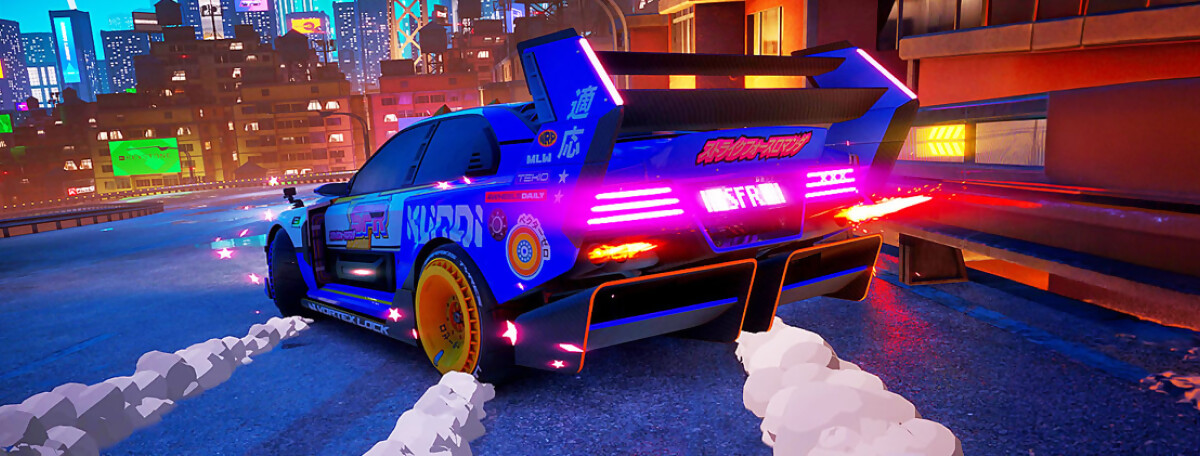
Set in a near-future dystopia, Screamer boasts striking graphics that pay homage to 90s Japanese animation. The game’s neon-lit city, towering buildings, and tentacle-like roads evoke Akira. By blending old-school 2D animation with modern 3D techniques, the game achieves a unique style with pronounced motion blur and hints of Auto Modellista. Unlike Capcom’s title, Screamer combines realism with graphic effects rather than relying on classic cel-shading, particularly during cutscenes. Race environments range from industrial docks to super-saturated neon streets with reflective puddles. Night races, in particular, create immersive experiences with dynamic lighting, convincing reflections, and explosive collisions that grab the player’s attention. Beyond its visual flair, Screamer innovates with its gameplay. Milestone didn’t just rehash the 1995 title; they’ve developed inventive driving mechanics, incorporating elements from fighting games like VS and Gears of War. Central to this is the “Echo System,” where each car has Sync and Entropy meters. Players fill the Sync meter by drifting, overtaking, and executing smooth gear changes. For example, a perfectly timed drift not only looks cool but also charges your Sync meter. The Entropy meter, on the other hand, is all about offensive maneuvers.
When these gauges are full, players can unleash boosts, shields, Strike moves that detonate opponents on impact, or activate Overdrive for a burst of speed until the next collision. These mechanics turn each race into a strategic battle where resource management and anticipation are as crucial as speed. Players must consider their position, abilities, and risks, adding a mind-game element reminiscent of fighting games.
Screamer diverges from typical racing games with its unique drift mechanic, which uses both analog sticks—the left controls the front wheels, and the right manages the rear. This control scheme presents a new driving experience with a learning curve. Initial attempts may result in spin-outs and collisions, but mastering the dual controls unlocks unprecedented control around turns. The game features a tutorial to guide players, but proficiency requires practice. Drifting is not just visually appealing; it’s essential for boosting gauges and maintaining a competitive edge. Milestone’s bold driving mechanic may not appeal to those who prefer more relaxed experiences like Burnout or Need for Speed. Some may find the challenge off-putting, but Milestone deserves recognition for injecting fresh ideas into a genre that could benefit from innovation. The gradual learning curve ensures a deep, satisfying racing experience.
Once players master these systems, they can delve into the adventure, particularly the Story mode, which unlocks all teams, drivers, and vehicles. While Screamer has flaws—the revenge narrative may feel isolating if a player’s native language isn’t represented, and the storytelling relies heavily on static images, which can be difficult to follow—the game offers both a cinematic experience and impressive variety. Although the initial hours might involve repetition of tracks, diverse environments, from the neon-lit Neo Rey to forests and the industrial Sky Road Desert, provide multiple tracks each with day and night variations. In terms of gameplay, Screamer reimagines the arcade racer with a story, unique characters, and clever mechanics reminiscent of Japanese animation. The dual analog sticks make drifting surprisingly intuitive, and the energy exchange dynamic between cars enables boosts, shields, and powerful attacks. Each character’s vehicle reflects an exaggerated Japanese design aesthetic.
Neon-Fueled Racing Mayhem: Screamer 2026 Redefines Arcade Racers
Screamer 2026 reinvents the classic arcade racer with Milestone’s signature touch, adding a story mode with multi-language dialogue and combat-inspired gameplay. Set in a neon-soaked, Akira-inspired city with diverse racing environments, the game features the Echo System, enabling players to manage gauges for boosts, shields, and Overdrive. Returning is split-screen play for two to four players, as well as the ability to drift using dual analog sticks. With modes ranging from Story to Tournament, Score Challenge, Race, Time Attack, Checkpoint, and Overdrive Challenge, Screamer 2026 delivers variety and innovative gameplay, offering a fresh and engaging take on the racing genre.
In Case You Missed It
Recently, Epic Games has faced a wave of changes with the news of approximately 1,000 job cuts worldwide, including those at their Brazil office, leaving them with around 4,000 employees. Author Sophie Laurent, in her March 24th report “Epic Games Provides Clarification to Drops of Games Following Layoff News” Epic Games Provides Clarification to Drops of Games Following Layoff News, revealed that while Horizon Chase and Turbo will no longer be available for download from June 1st, their sequels remain accessible across multiple platforms. Meanwhile, in a remarkable turnaround, Crimson Desert, despite facing severe criticism post-launch, has proven its mettle with a surge in player ratings on Steam just days after release. Author Jonathan Dubinski’s March 25th analysis “After Stock Disaster, 3 Million Sales Saved Crimson Desert” After Stock Disaster, 3 Million Sales Saved Crimson Desert shows how the South Korean prodigy from Pearl Abyss has recovered investor confidence and demonstrated its strength in the gaming scene with 3 million copies sold worldwide within weeks. These developments follow Epic Games’ strategic pivot announced by Sophie Laurent on Players For Life, where over 1,000 employees were laid off in response to Fortnite’s declining engagement. The company remains committed to delivering exceptional experiences, focusing on innovative seasonal content and live events in Fortnite, while also accelerating advancements in Unreal Engine technology towards a promising transition to Unreal Engine 6 next year. Be sure to check out Laurent’s comprehensive coverage of this developing story here URGENT: Epic Games Cuts Over a Thousand Workers; Horizon Chase, Horizon Chase Turbo No Longer Available for Download.

| Specification | |
|---|---|
| Official Name | Fault Milestone One |
| Brief Summary | While attempting to make an escape from a brutal assault that’s devastated their homeland of Rughzenahide, Princess Selphine and her Royal Guard Ritona mysteriously teleport to an unknown forest surrounded by vegetation not native to the surroundings of Rughzenahdie. The atmosphere is thick and heavy and no sign of life can be found, which is particularly unusual for such a lush forest. Sign of life isn't the only thing missing though. Something is odd about this land - something is amiss - but Selphine and Ritona are too startled to notice the obvious.
Fault is a Science Fantasy Kinetic Novel about Selphine, a bubbly, happy-go-lucky Princess and her sharp-witted but slightly misanthropic Royal Guard Ritona. Follow them on their journey of a lifetime as they try to make it back home to the Kingdom of Rughzenhaide. |
| Platforms | PlayStation 4, Linux, PC (Microsoft Windows), PlayStation Vita, Mac, Nintendo Switch |
| Released | August 9, 2013 |
| Genre | Simulator, Adventure, Indie, Visual Novel |
| Play Modes | Single player |
| Content Rating | T |
| Languages | Chinese (Simplified), English, Japanese, Turkish |
| Genre | ALICE IN DISSONANCE |
| Genre | ALICE IN DISSONANCE, Sekai Games |
| Ratings | 80/100 (12 reviews) |
Have any thoughts?
Share your reaction or leave a quick response — we’d love to hear what you think!
-
 0
0
-
0
-
0
-
0
-
0
-
0


