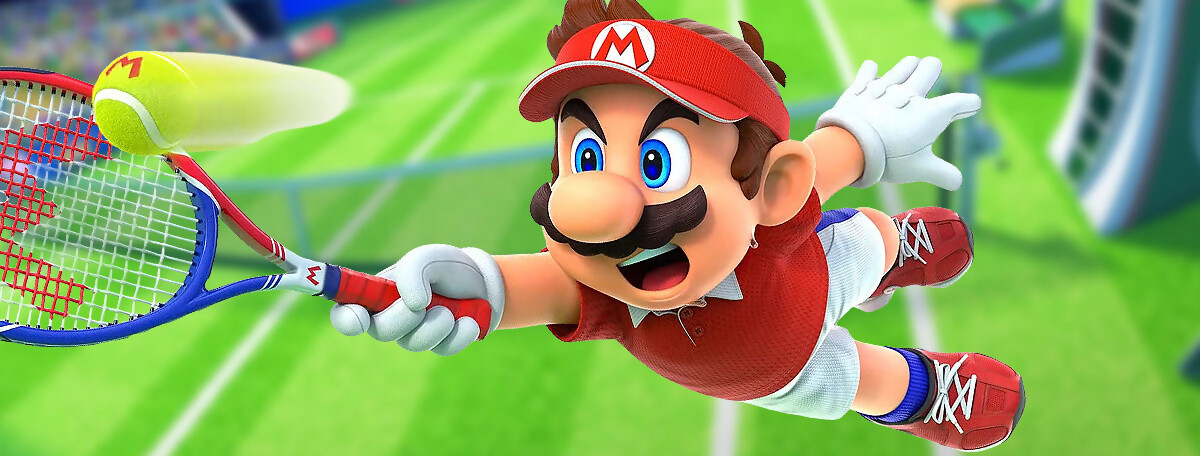
Key Takeaways
Created with AI - we're still experimenting, so apologies if it misses the mark
- Mario Tennis Fever emphasizes chaotic gameplay, prioritizing spectacle and unpredictability over strategic depth compared to previous installments like Mario Tennis Aces.
- The game features a variety of unique rackets with special tricks that can alter the court or summon doubles, but some rackets have an unfair advantage, making matches less balanced.
- Adventure mode in Mario Tennis Fever could use improvement, with tedious tutorial sections and repetitive tasks detracting from the overall experience. The single-player quest feels lacking in excitement.
- Despite visual appeal and abundance of content (including multiple characters, rackets, tournaments, minigames, local multiplayer, and online modes), the games repetitive commentary and lack of balance can be frustrating for players, particularly in online matches.
Recommended products
This page contains affiliate links. As an Amazon Associate, we earn a commission from purchases made through these links.
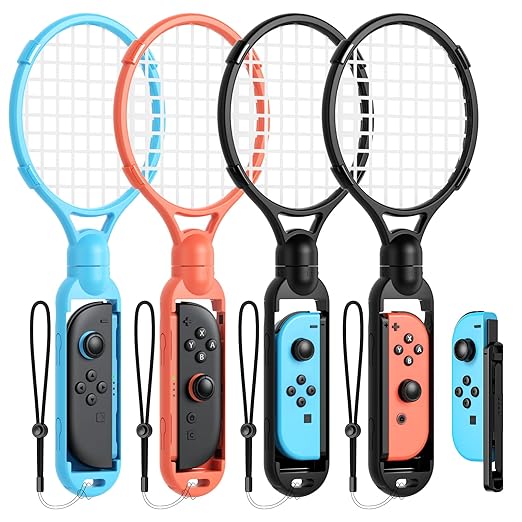

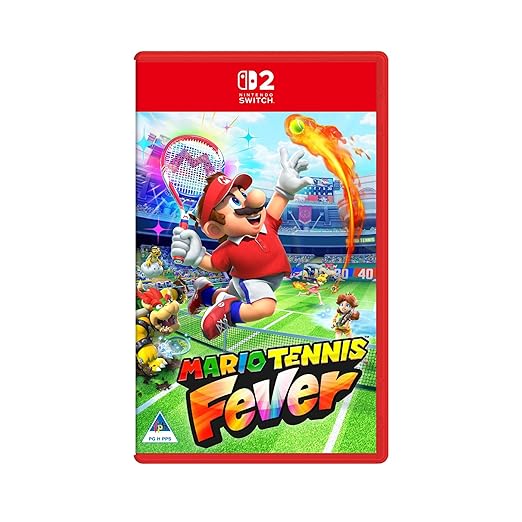
Mario Tennis Fever


FEBRUARY 2023 Mario’s tennis saga continues with Mario Tennis Fever, the newest installment in a series that began 31 years ago with the 1995 Virtual Boy release. While the original Mario Tennis was a simple game, it has evolved into an arcade-style spectacle, with Fever on the Switch 2 upping the ante through its powered-up racket mechanic. Unlike the precision-focused Mario Tennis Aces (2018), Fever prioritizes spectacle and chaos, offering 30 unlockable rackets through Adventure mode and other gameplay options. In Mario Tennis Fever, each of the 30 rackets has a unique trick that activates once the frenzy meter is full. Some rackets transform the court into a muddy mess or an ice rink, while others create clones of the player. Still other rackets trigger tornadoes, fire walls, or shrinking mushrooms and Bloups to hinder opponents, making it difficult for them to return the ball. However, players can execute a frenzy counter by returning a frenzied shot quickly enough, turning the effect against their opponent. The game implies that opponents can also counter within a time limit, but the chaotic nature of frenzy counters makes consistent defense unreliable.
Mario Tennis Fever emphasizes chaotic matches at the expense of the strategic gameplay that defined Mario Tennis Aces. Although frantic returns are possible, they often occur on the fly, as letting the ball hit the ground is not an option. Volleys are short, usually ending with a smash. Camelot’s design choices for this Switch game remove the ability to slow time or use technical shots to save difficult balls, as was possible in Aces. Defenses are unreliable; attempting to cancel an opponent’s strikes or sacrificing energy to save the ball is futile. Even using a frenzy may backfire due to the ball’s quick rebound. While powered-up rackets can create muddy zones, ice rinks, and fire barriers, these effects can be countered. The result is chaotic fun that may not appeal to serious tennis fans.
Regarding the balance of powers, some rackets have a clear advantage. For instance, Bill Dozer’s racket turns the ball into a slow-moving football, posing little challenge for the user’s opponent. Amp’s electromagnetic fields and Mud’s magical powers can also overwhelm Mini-Champi. These powers were intended to add excitement, but can create frustrating and unfair matches. A counterbalance system, such as a ShiFuMi-style setup where each power has a weakness, would improve fairness. Without balance, the game feels more like Mario Tennis Fever with an element of deception. Online play exacerbates the issue, as players frequently encounter opponents using the same overpowered rackets, which quickly becomes repetitive and discouraging. Mario Tennis Fever arrived on the Switch after an eight-year hiatus, prioritizing accessibility and fun through the use of frenzied rackets that can transform courts or summon doubles, though these effects are reversible. However, the imbalance of power among the rackets undermines the online experience despite the game’s visual appeal.
Mario Tennis Fever’s Adventure mode also needs improvement. Players spend much of their time in a tedious tennis academy tutorial, learning basic shots at a slow pace. The repetition, unnecessary backtracking, and excessive dialogue become tiresome. Although the mode becomes more exciting after escaping the academy, calling this single-player mode an “Adventure” is an exaggeration. Players control Baby Mario as he travels the world in search of a magical fruit for Daisy, an uncompelling quest. Despite issues with fair play and the single-player experience, Mario Tennis Fever offers an abundance of content. Players can choose from 38 characters, with 18 unlocked from the start, each possessing unique traits. The game also features 30 swappable rackets, tournaments, minigames, local multiplayer, and online modes. The Trial Tournament, which presents ten challenges with only three lives and culminates in a final boss battle, offers a satisfying sense of progression. However, the mode’s appeal diminishes in two-player mode, where the second player lacks control and functions merely as a shadow of the first player. Mario Tennis Fever features high-quality cutscenes and vibrant in-game graphics. The Cancan flower commentator, however, detracts from the experience, with repetitive and irritating commentary.
Enhancing Mario Tennis Fever’s Balanced Gameplay and Engaging Single-Player Adventure
In conclusion, Mario Tennis Fever delivers a visually appealing and content-rich experience, but its unbalanced gameplay and underwhelming Adventure mode may still leave players wanting more.
In Case You Missed It
Did you know that Amazon has unveiled the first official image from their upcoming God of War series? Bruno Pferd’s latest post, “God of War: Amazon’s First Image Sparks Widespread Internet Disappointment” God of War: Amazon’s First Image Sparks Widespread Internet Disappointment takes a closer look at this intriguing glimpse into the world of Kratos and Atreus, despite sparking some controversy due to its artificial appearance. Meanwhile, Marcus Thompson’s insightful article, “Nearly Flawless Journey of Space Marine 2 Faces First Major Setback” Nearly Flawless Journey of Space Marine 2 Faces First Major Setback delves into the recent backlash faced by Warhammer 40,000: Space Marine 2 due to its Chapter Voice Pack 1 DLC. But as we midway through exploring gaming’s leap into live-action, let’s not forget the buzz around Amazon Prime Video’s God of War adaptation. In Bruno Pferd’s recent piece, “First Image from Live-Action God of War Series Reveals Kratos and Atreus” First Image from Live-Action God of War Series Reveals Kratos and Atreus we get our first glimpse of Ryan Hurst as Kratos and Callum Vinson as Atreus, promising an epic watch led by Ronald D. Moore and Frederick E.O. Toye.

| Specification | |
|---|---|
| Official Name | Groove Coaster: Initial Initial Echo Ego |
| Brief Summary | Touhou Project music DLC for Groove CoasterTitle: Initial Initial Echo EgoArtist: RD-Sounds*Arrange from Touhou ShinreibyouDifficulty: Simple 2 / Normal 5 / Hard 8BPM: 156 |
| Genre | Music |
| Play Modes | Single player |
Have any thoughts?
Share your reaction or leave a quick response — we’d love to hear what you think!
-
 0
0
-
0
-
0
-
0
-
0
-
0


