Key Takeaways
Created with AI - we're still experimenting, so apologies if it misses the mark
- Weighted Average Formula: Metacritics Metascore is a weighted average, not a simple average, with certain publications or critics carrying more influence due to their perceived experience and editorial quality.
- Homogenization of Experiences: The platforms scoring system can oversimplify complex gaming experiences by reducing them to a numerical average, potentially penalizing titles that deviate from traditional critical evaluation formulas.
- Impact on Creative Processes: Metacritics influence extends beyond aggregation, affecting creative decisions within the industry. Studios may opt for conservative designs to mitigate risk, favoring familiar structures over innovative solutions.
- Review Bombing and Consumer Decisions: Extreme user reviews, often motivated by non-game-related issues, can significantly impact a games Metascore. This raises questions about the authenticity of player sentiment and its influence on consumer decisions.
Recommended products
This page contains affiliate links. As an Amazon Associate, we earn a commission from purchases made through these links.


Weighted Influence of Metacritic’s Hidden Mathematics
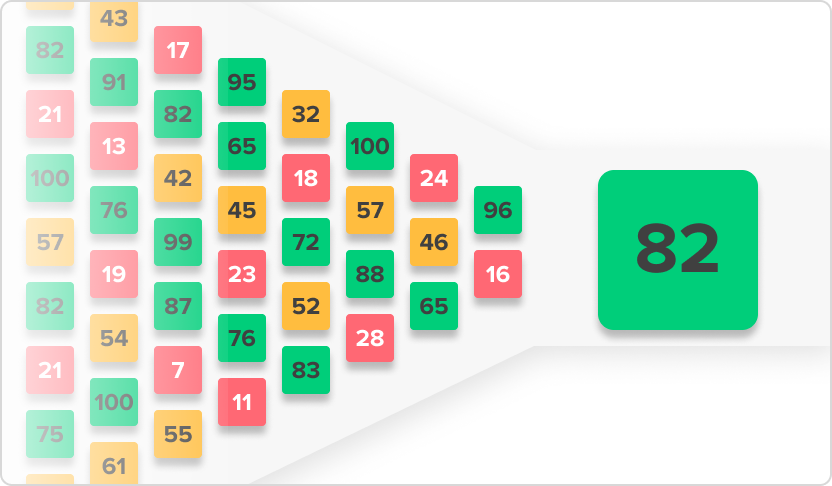
Over the past 20 years, Metacritic has evolved into a key indicator within the video game market. The platform aggregates professional reviews, converting them into a single Metascore that many players use to navigate the saturated landscape of new releases. However, this score has gained excessive influence, impacting creative and business decisions and shaping consumer culture. The Hidden Mathematics Behind the Rating Rather than a simple average, the Metascore is a weighted average of individual critic scores. According to Metacritic, “Upon selecting our origin publications, we noticed that some critics consistently write better reviews (more detailed, insightful, wellarticulated) than others. Additionally, some critics andor publications usually hold more prestige and respect in their sector than others. To reflect these factors, we assign weights to each publication (and, in the case of film and television, individual critics), making some publications weigh more heavily in METASCORE calculations than others.”
Metacritic’s Homogenization of Complex Gaming Experiences
This weighting system means that similar reviews can have different impacts on the final score based solely on their source. While intended to acknowledge experience and editorial quality, this method raises questions about who determines what constitutes “respect,” and how a small score difference can drastically alter a title’s perception, thereby affecting a studio’s business. When the Number Replaces Context The core issue with Metacritic is not the aggregation itself but its application. Problems arise when the Metascore replaces context. A game may offer compelling narratives or innovative mechanics, but the Metascore homogenizes these qualities, reducing complex experiences to a numerical average. This penalizes titles that deviate from traditional critical evaluation formulas, oversimplifies judgment, and encourages prejudgment. Games are quickly labeled successes or failures before players experience them, distorting player expectations and potentially creating a self-fulfilling prophecy where classification shapes experience. Real Impact on Studio Work
Metacritic’s Influence on Creative Processes and Review Bombing’s Impact on Game Ratings
Metacritic’s influence has transformed its score into an informal, internal validation parameter within the industry. The Metascore often becomes a symbolic benchmark for quality or success, leading to disproportionate significance for minor score differences. This external measure, designed to synthesize critical opinions, inadvertently becomes an internal filter, privileging works that align with established expectations over more original or experimental ones. Consequently, studios may opt for conservative design decisions to mitigate risk, favoring familiar structures and proven mechanics over unconventional solutions. A work’s recognition is then often tied to a single number that barely reflects the collective effort, project limitations, or creative identity. Thus, a platform intended to organize external criticism inadvertently influences creative and development processes and the diversity of player experiences. Review Bombing: The Players’ Retaliation Despite the weighting of professional critics and consideration of context, user reviews can cause a numerical rating to fluctuate rapidly, often unrelated to a game’s inherent quality. “Review bombing,” characterized by large volumes of extreme evaluations, is frequently motivated by disagreements over non-game-related issues such as company policies, narrative content, or creative decisions.
Metacritic’s Impact on Consumer Decisions and the Question of Authentic Player Sentiment
For example, The Last of Us Part II experienced a significant score drop due to a flood of negative reviews shortly after its release. In response, Metacritic implemented a minimum playtime verification before accepting user ratings. This raises the question of whether aggregated professional opinions truly represent genuine player sentiment and leads into the role of the consumer. Consumers in the Storm For many gamers, the Metascore remains a useful shortcut for navigating new releases. However, this simplification has drawbacks. Consumers may forgo in-depth analyses, discussions, and experiences with games that, despite an average rating, might offer unique value. This dynamic perpetuates the platform’s power, transforming the score from a reference point into a perceived marker of quality. What Does This Mean for the Future? The discussion around Metacritic highlights a critical aspect of video game critique: numbers can be helpful for synthesis but cannot replace human interpretation. While an aggregated score indicates general trends, it fails to capture context, creative intentions, or the diverse ways audiences connect with a work. Even alternative platforms like OpenCritic, which strive for greater transparency and methodological diversity, still rely on the principle that criticism is inherently subjective.
Metacritic’s Influence and its Impact on Authentic Gaming Experiences
Therefore, the central question is not whether Metacritic wields too much influence but how the industry and audience can best use such metrics. The goal is to develop indicators that guide without restricting, inform without stifling discussion, and respect creative variations and individual experiences. As long as game assessment is reduced to a single number, the risk of mistaking statistical consensus for artistic merit persists. Notably, MindsEye, directed by ex-GTA producer Leslie Benzies, received a Metacritic score of 28, earning it the distinction of being Metacritic’s worst game of 2025. Promoted as a gateway to Everywhere, a Roblox-like platform still in development, its creators reportedly withheld review copies. Whether used as a reference or a shaper of expectations, the Metacritic score continues to be a key point of discussion for gamers and developers.
In Case You Missed It
Are you ready for a thrilling adventure in gaming? First, dive into Ahmed Hassan’s comprehensive review of Brazilian indie gem “Deathbound,” published on January 11th. João Custódio spent an impressive 40 hours exploring this captivating title, uncovering its unique gameplay mechanics, rich narrative structure, striking art style, and immersive sound design – it’s a must-read to discover why Deathbound stands out among indie titles: Review of Brazilian Indie Game Deathbound After 40 Hours of Gameplay by João Custódio. Then, take a breath and reassure yourself with Jonathan Dubinski’s latest piece for Players For Life, “The Sims Team Guarantees Continued Inclusivity and Creative Freedom,” published on the same day. He delves into the studio’s response to recent acquisitions, addressing community concerns about inclusivity and creative freedom – it’s an insightful article that all Sims enthusiasts should check out here: The Sims Team Guarantees Continued Inclusivity and Creative Freedom. Lastly, let Marcus Thompson take you on a dreamy journey with his piece, “Sonic in RPG Style? It Would Look Like This and It’s Dreamy,” published this week. He highlights an incredible fan demo that showcases dynamic animations, pixel art style, and a turn-based system that truly honors Sonic’s agility – don’t miss out on seeing what could be the future of our favorite hedgehog here: Sonic in RPG Style? It Would Look Like This and It’s Dreamy.. It’s an exciting week in gaming, so let’s dive right in!
They also talk about it
Links to external sources for further reading
- What is the worst video game of 2025?What is the worst video game of 2025?metro.co.uk
- Every FromSoftware Game (Ranked By Metacritic Score) (2026)Every FromSoftware Game (Ranked By Metacritic Score) (2026)solatatech.com
- Creators and Game DevelopmentCreators and Game Developmentblog.udonis.co
Have any thoughts?
Share your reaction or leave a quick response — we’d love to hear what you think!
-
 0
0
-
0
-
0
-
0
-
0
-
0


